
DnD Party Miniature Maker
Describe one character and get a whole party of style-matched miniatures. Loreform's DnD party miniature maker re-rolls weapons, poses and builds while keeping the face, armor and colors consistent — then exports every model as a print-ready STL at one unified tabletop scale. No sculpting, no Blender.
A DnD party miniature maker turns a single character concept into a matching set of tabletop minis. Describe one hero, generate style-matched variants — different weapons, poses and builds — and download a print-ready STL for every model at a unified 28–32mm scale. About 20 credits (~$1) per miniature.
- Style-matched party from one prompt
- Unified 28–32mm scale STL
- ~$1 per miniature (20 credits)
One prompt in. A whole party that matches.
Every image below is a real Party Forge output from the same run — no cherry-picking, no re-touching. Here is how one base character becomes a style-matched set.
Step 1 — Style-matched variants
Reference-anchored editing keeps the face, armor and shield emblem consistent while the weapon and pose change.
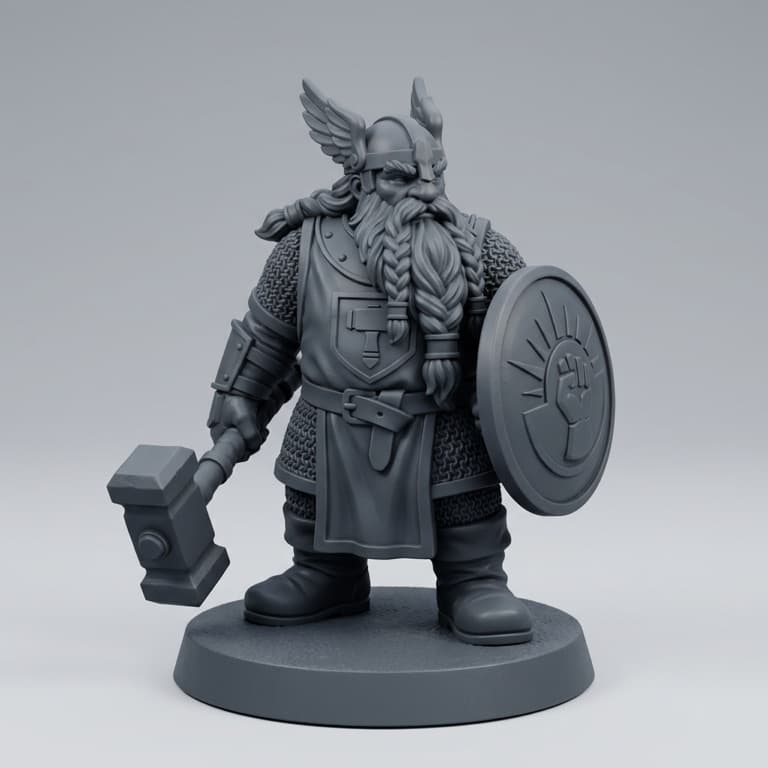
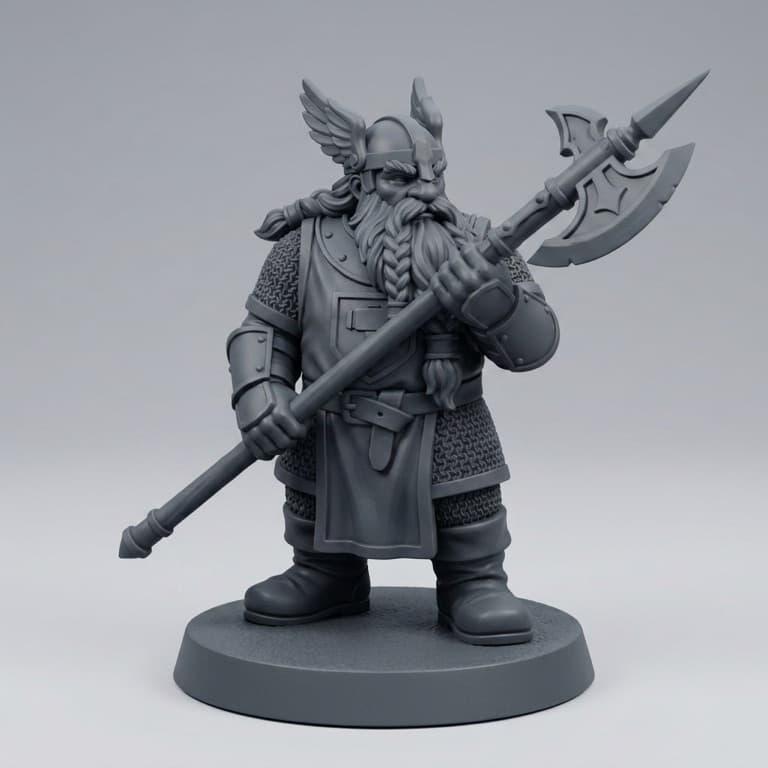
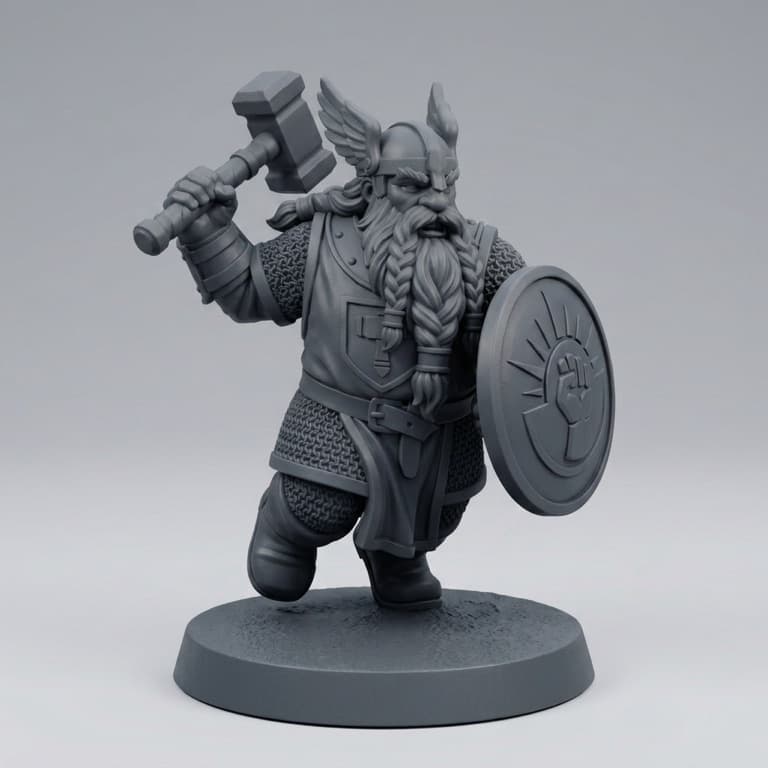
Step 2 — High Fidelity: confirm views, then build 3D
Back and left views are derived so the model is not guessing at the parts the camera never saw.
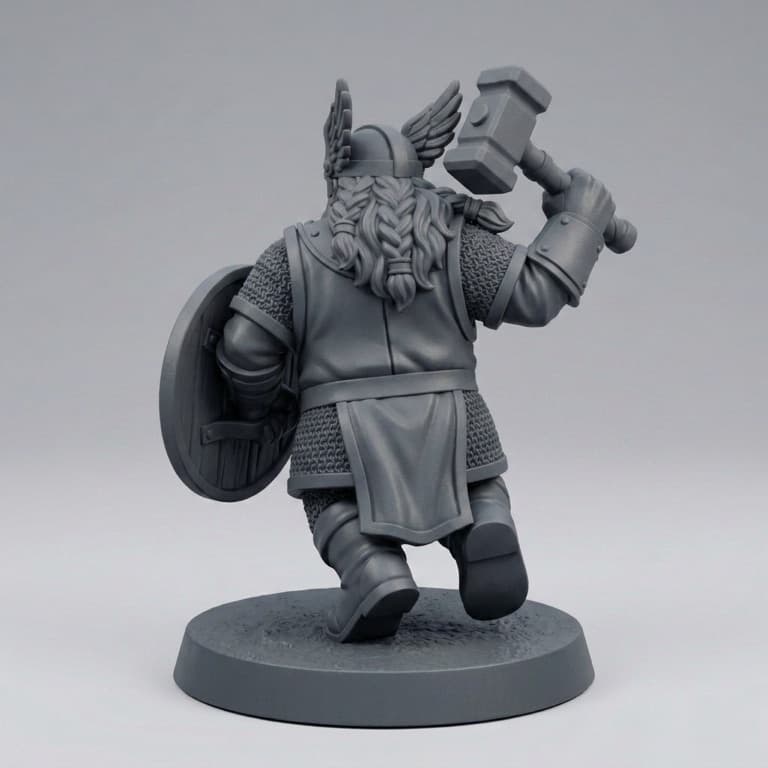
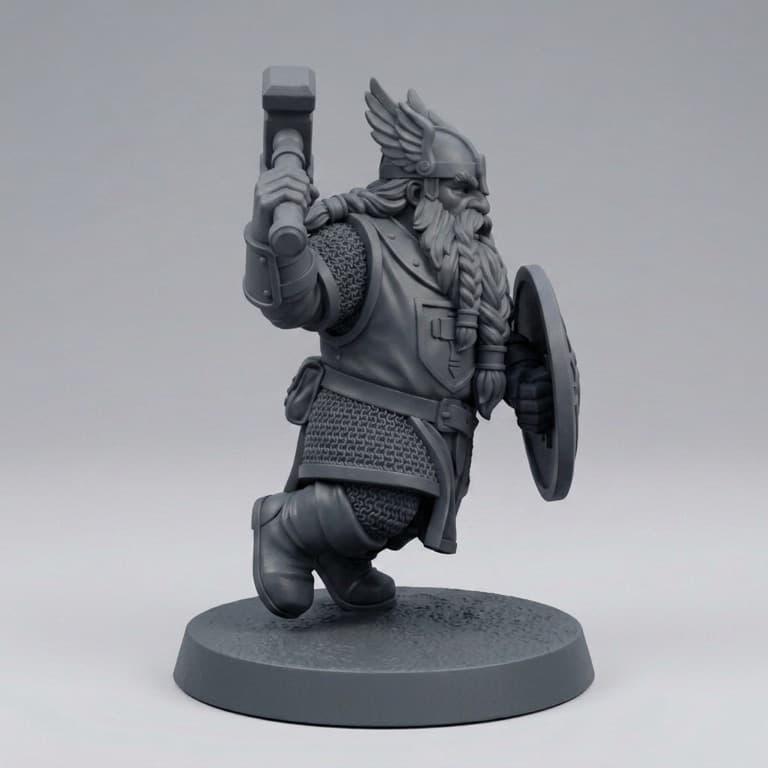
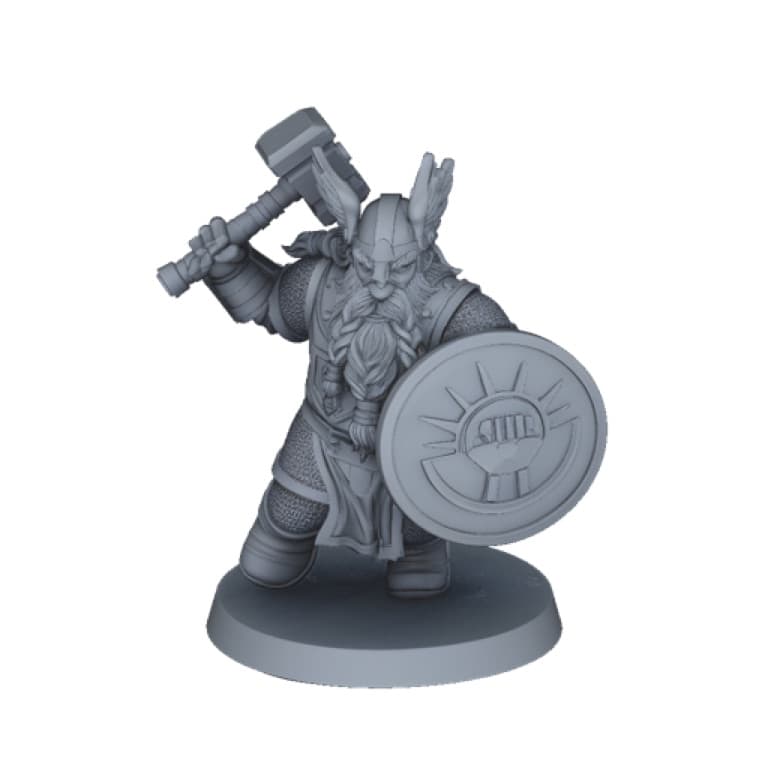
Why the extra step? When the AI has to invent a character's back, 10–20% of the time the detail drifts — a strap moves, an emblem softens. So we put the three-view check before the 3D conversion. Re-rolling one flat view is cheap. Re-generating a finished mesh is not.
of the mesh surface anchored to your concept art when three views feed the model, versus ~40–50% from a single front view.
unified scale across the whole party — both models in this case export at exactly 32.00mm, so they line up on the table.
per miniature — roughly $1 each, next to about $7.99 for a single Hero Forge STL download.
Case measured in-app: the multi-view 3D pass finished in 168 seconds at roughly 500k triangles. Your times vary with load and detail.
Built to Keep a Party Consistent
Most generators make one mini at a time. Party Forge is built around the harder problem: a set that looks like it belongs together.
Reference-anchored variants
Every variant is edited from the same base character, so the face, armor and shield emblem carry over while the weapon, pose or build changes.
High Fidelity three-view
Before 3D, derive back and left views so the model isn't guessing at the parts the camera never saw. That anchors roughly 85–90% of the mesh to your concept art, versus about 40–50% from a single front view.
One party, one scale
Export the whole set at a single 28–32mm height, so your NPC party or warband lines up on the table and on the base.
How does the DnD party miniature maker work?
Three steps from one prompt to a printable party.
Describe your base character
Write one prompt — say, a dwarf paladin with a warhammer and round shield — or upload a reference image. This is the anchor the whole party is built from.
Generate style-matched variants
Add variant slots for weapon, pose or build. The AI re-rolls each one from the base, keeping the look consistent. A party runs from the base plus up to five variants.
Confirm views, build 3D, export
Optionally derive extra views for High Fidelity, convert the selected members to 3D, and download every model as STL or GLB at your chosen scale.
DnD Party Miniature Maker FAQ
Who builds parties this way?
From a table of player characters to a one-shot's cast of NPCs, a matching set beats a mismatched bag of proxies.
Your whole table, matched
Give every player character a mini that shares one art style instead of a mismatched bag of proxies.
NPC party miniatures in minutes
Spin up a bandit crew, a cult cell or a noble retinue as a consistent set before your next session.
Warband miniature maker
Build a skirmish warband where every fighter reads as one faction — same palette, same silhouette language.
Matching miniature set
Print a unit that looks like it belongs together, at a unified scale that fits your bases.
Why Loreform for party building
One base, many variants
You pay per miniature — about 20 credits (~$1) each — instead of $7.99 for a single boutique STL. A six-model party stays affordable.
Consistency you can inspect
Every showcase image is a real output. You can watch the shield emblem survive a weapon swap, a pose change and the jump to 3D.
Print-ready, not just pretty
Models export as STL for resin or FDM, at 28–32mm heroic scale with bases sized for standard grids.
No sculpting skills required
Describe in plain language. No Blender, no ZBrush, no kitbashing — the AI handles the modeling.


